Skip to content

A personal branding guide beyond titles and timelines

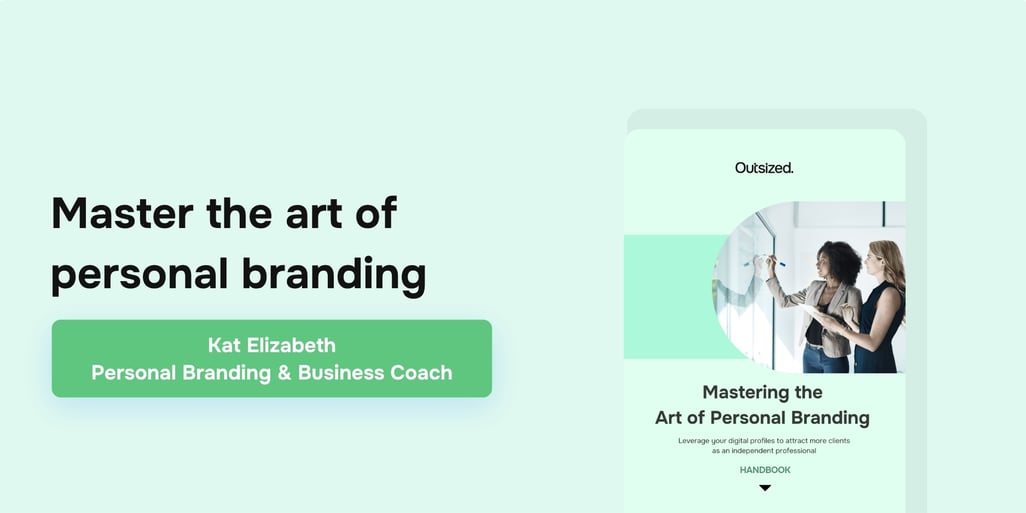
                                                            Personal branding handbook


As an independent professional, your digital presence is often the first impression a potential client has of you. An outdated profile, an unclear positioning or the absence of visible expertise can quietly close doors before a conversation even begins. Building a personal brand is not about self-promotion. It is about creating the conditions for the right people to find you, understand what you do and trust you enough to reach out.

This handbook is a practical starting point for independent professionals who want to build a purpose-driven personal brand grounded in their actual values and expertise, one that consistently attracts the right clients and opportunities.


What you'll take away from this handbook:

  •  A framework for defining the four core components of your personal brand: mission, vision, image and values, and how to use them together to create a consistent digital presence

  • Activity Sheet 1: the X factor exercise, using the Problem Action Result method to identify your top skills and values and distil them into a Unique Selling Proposition

  • Activity Sheet 2: the audience definition exercise, which helps you build a detailed customer persona and identify the pain points your expertise is best placed to solve

  • A six-step action plan covering how to reflect on your USP, define your audience, do the right research, network actively, collect testimonials and optimise your digital profiles over time

  • The 60-40 content balance rule: 60 percent serving your audience's needs, 40 percent expressing your mission, values and perspective

  • Guidance on how to shift your content focus as your niche evolves without abandoning the audience you have already built  

 
This handbook is designed to be worked through, not just read. The activity sheets are where the real value sits.

Download the handbook, complete the activity sheets and build the brand that brings the right work to you. 

What is a personal brand and why does it matter for independent professionals?

 A personal brand is the professional identity you build from your experiences, values and expertise, expressed consistently across your digital presence. For independent professionals it matters more than for most: without an employer's brand alongside your name, what a potential client finds is entirely what you have built, or by default, what has accumulated without intention. A well-built brand builds credibility, improves visibility, enables better quality networking and helps you discover and articulate your niche. 

How do you identify your USP if your career spans multiple industries or functions?

Work through the X factor activity before trying to define it. The exercise maps your key areas, skills and values using the PAR method to identify moments where you made a measurable difference. Look for repetition: skills that appear across multiple answers are your strongest candidates. Narrow to the top five, remove contradictions and build toward a USP that describes what makes you different in your specific combination, not just in your field generally. 

How do you balance content for your audience versus expressing your own perspective?

The handbook gives a clear answer: 60 percent focused on your audience's needs and pain points, 40 percent on your mission, values and professional perspective. All audience-centric content makes you useful but not distinctive. All self-expression without reference to what your audience needs fails to convert. The 60-40 balance ensures your content is both relevant and authentic, attracting clients who are drawn to your expertise and your way of thinking. 

How do you shift your personal brand to a new area without losing the audience you have built?

Run the new direction in parallel rather than replacing what you have. Build content and connections for the new audience while continuing to serve the existing one. You do not need to announce a pivot or dismantle what you have built. Introduce the new focus gradually, test the response and let the balance shift naturally over time as the new audience develops.