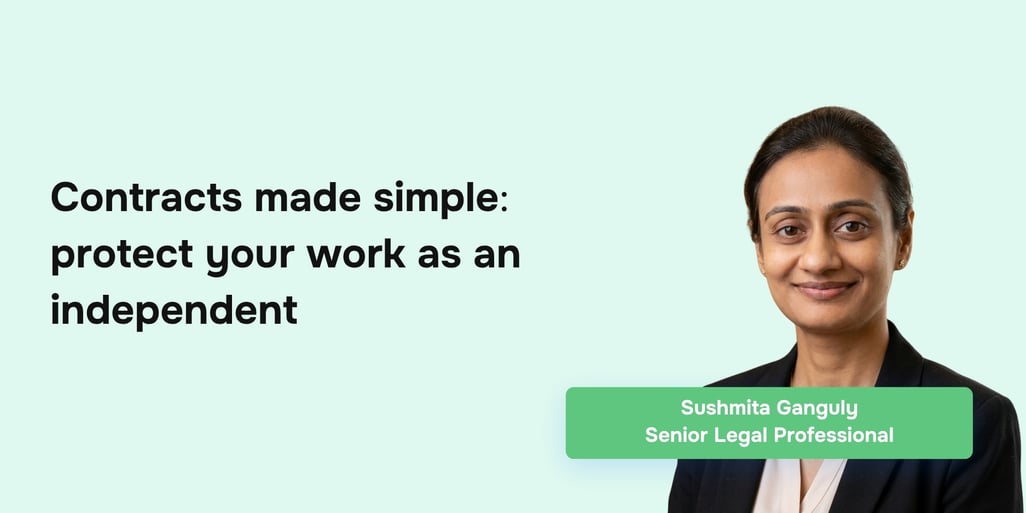
This session, led by Sushmita, a lawyer with over 20 years of experience across corporate and independent practice, is a practical deep-dive into the legal fundamentals every independent professional needs to have in place. She covers everything from how to choose the right business structure at the start to how to negotiate contract terms with confidence and closes with a live review of a real consulting agreement, flagging the specific gaps and red flags you should be checking for before you sign.
Watch the full recording here:
What you'll take away from the session:
-
The key business structures available to independent professionals: sole proprietorship, partnership, limited liability partnership and private limited company, including the differences in liability exposure, compliance burden and long-term viability of each
-
The tax and compliance obligations that come with independent practice, including TDS, GST, invoicing standards, record-keeping requirements and why maintaining clean documentation over multiple years is as important for loan approvals and client credibility as it is for regulatory compliance
-
How to draft a scope of work that protects you: why inclusions and exclusions need to be explicit, how ambiguity in scope creates the conditions for disputes, and how to limit revision cycles and deliverable creep from the outset rather than negotiating around them after the fact
-
The indemnity and liability clauses most independent professionals get wrong: how to cap your exposure, why you should only indemnify for material breaches rather than any breach, and why excluding indirect and consequential damages from your liability is non-negotiable
-
Termination rights, post-termination obligations and why confidentiality clauses need to survive contract end: the difference between for-cause and without-cause termination, how to build a clean exit mechanism and what happens to client data and derivative works after the engagement closes
-
Contract negotiation tactics that work: why every clause is negotiable, how to come to the table with rationale rather than objections, and the specific commercial terms including payment, liability cap, exit and intellectual property provisions that deserve the most attention before you sign
If you are operating as an independent professional without a reviewed, properly structured contract in place, this session will show you exactly what you are missing.
.jpg?height=200&name=%23Resources%20Thumbnail%20(3).jpg)
.jpg?height=200&name=Financial%20Analysis%20Report%20(24).jpg)